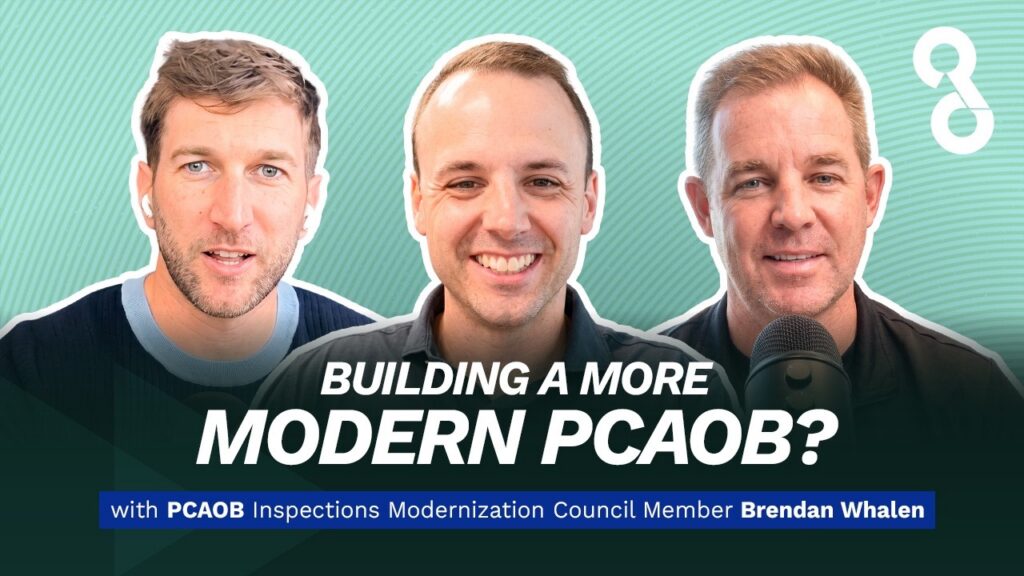
The uncertainty around the QC 1000 amendments is over. On June 9, the PCAOB proposed nine targeted amendments to QC 1000. This week, the Board made those amendments final and gave firms the clarity they have been waiting for.
What did not change is just as important as what did. The December 15, 2026 implementation deadline remains in place. With fewer than 100 days left, firms now have a final rule set and a narrowing window to act.
The final adoption follows CPAClub’s earlier coverage of the proposal in The PCAOB Said QC 1000 Isn’t Going Anywhere. Firms can also review the final standard and related materials through the PCAOB’s official QC 1000 resource page.
For firms that have been waiting for the final amendments before moving forward, that waiting period is over. The path is now clearer. The remaining question is how quickly and how deliberately your firm will implement.
The headline is simple. The uncertainty is over, but the deadline did not move.
1. December 15, 2026 Is Still the Deadline
For all of the discussion surrounding the targeted amendments, the PCAOB did not change the implementation date. December 15, 2026 remains the deadline.
That matters because many firms were watching the amendment process to see whether timing relief would follow. It did not. The final adoption resolves uncertainty, but it does not create more runway.
Firms are now fewer than 100 days from implementation. In practical terms, that is not a planning horizon. It is an execution horizon. A quality control system of this significance is not something most firms can build, assign, document, socialize, and operationalize in a matter of weeks.
If QC 1000 applies to your firm, there is nothing left to wait for. Your team should already be moving from interpretation into implementation. Governance decisions, responsibility assignments, documentation structure, evaluation planning, and operating procedures need to be in progress now.
The firms that will be in the strongest position by December 15 are not the ones still deciding when to start. They are the ones mobilizing now with a clear workplan, defined ownership, and enough time to make thoughtful decisions instead of rushed ones.
2. The Design-Only Requirement Is Gone
One of the most significant practical changes is the removal of the design-only requirement for PCAOB-registered firms that are not currently performing PCAOB work.
Under the original standard, those firms still would have been required to design a QC 1000 system even if they were not actually conducting PCAOB engagements. For the hundreds of registered firms in that category, that created a substantial burden tied to a workload they were not currently performing.
That requirement has now been removed. For firms that are registered but not performing PCAOB work, this is meaningful relief. It reduces the immediate implementation burden and avoids requiring firms to build a formal QC 1000 structure solely because they remain registered.
At the same time, firms that do perform PCAOB engagements should not read this amendment as a broader rollback. If your firm is in scope because it is performing PCAOB work, the obligation to implement a full QC 1000 system remains very real and very near.
The practical step here is straightforward. Each firm should confirm which category it is in and document that conclusion clearly. For some firms, this amendment changes the implementation picture materially. For others, it changes very little. Clarity on applicability should come first, because everything else flows from that determination.
3. More Flexibility Around Who Performs QC Responsibilities
The final amendments also provide more flexibility around who can perform certain QC responsibilities. Those responsibilities can now be assigned to people outside the firm or divided among multiple people.
This is a practical improvement, especially for smaller firms. Many do not have a bench of extra partners available to absorb new governance, monitoring, evaluation, and quality management responsibilities. In those environments, rigid assignment expectations can create strain quickly.
The amendment recognizes operational reality. It gives firms more room to build a quality control structure that reflects their actual size, resources, and risk profile rather than forcing an artificial model that may look tidy on paper but prove difficult to sustain in practice.
That flexibility, however, should be used deliberately. Assigning responsibilities externally or splitting them among multiple individuals can strengthen a system, but only if accountability remains clear. Your firm still needs to define who is responsible for what, how those responsibilities interact, and how decisions, monitoring, and follow-up will be documented.
Used well, this amendment allows firms to design a more durable operating model. Smaller and mid-sized firms, in particular, can now build around capability, availability, and independence considerations in a way that is more realistic and more sustainable over time.
4. The External QC Function Was Rescinded
The PCAOB also rescinded the External QC Function requirement. For most firms, this will not change day-to-day planning because the requirement applied only to firms auditing more than 100 issuers.
Even so, the underlying discussion remains important. Board Member George Botic’s comments highlighted the principle behind the requirement, which was to create meaningful independent input as part of a firm’s quality management approach.
That principle should not be dismissed simply because the formal requirement went away. Not every firm needs an External QC Function. Most never would have been required to have one. But every firm should still consider where independent challenge and informed outside perspective come from within its quality management framework.
That is not only a compliance question. It is also a performance and transformation question. Independent input can help a firm identify blind spots, challenge assumptions, strengthen system design, and improve how quality objectives are carried into actual practice.
The practical takeaway is clear. Do not lose sight of the principle. Even without a formal External QC Function requirement, firms should still ask whether they have enough meaningful independent input to support both compliance and improvement.
5. Firms Can Choose Their Annual Evaluation Date
Another important amendment is the ability for firms to choose their own annual evaluation date. Under the original requirement, every firm would have been working toward a September 30 evaluation date.
That fixed date would have created unnecessary rigidity for many firms already managing multiple quality-related calendars. Now, firms can select an annual evaluation date that better fits how the rest of their systems and review cycles already operate.
This creates a real opportunity to align QC 1000 with SQMS, ISQM, peer review, and other quality management activities. Instead of maintaining several disconnected deadlines, firms can create a more coordinated annual rhythm.
That coordination matters operationally. A well-chosen date can reduce pressure during already busy periods, improve scheduling around leadership and reviewer availability, and make it easier to gather evidence, perform evaluations, and complete remediation planning in a disciplined way.
The strongest approach is usually intentional rather than convenient. Firms should choose an evaluation date that supports a coherent quality management cycle, not simply the first available slot on the calendar. Done well, this amendment can make implementation more manageable and long-term administration more effective.
PCAOB inspections and what comes next
The amendments matter. But the larger story may be what they signal about PCAOB inspections.
QC 1000 is not simply about reaching an implementation deadline. It is about what comes next. The PCAOB is strongly considering a more integrated, risk-based inspection approach in which a firm’s quality control system plays a much larger role in how the firm is evaluated.
A useful analogy is the integrated audit model. When auditors test controls and determine whether those controls are designed and operating effectively, that work informs the nature, timing, and extent of other testing. The quality control system may begin to function in a similar way within the inspection process. It may shape how the PCAOB assesses risk, directs attention, and evaluates the firm more broadly.
That is why QC 1000 should not be treated as a documentation exercise. It is not about producing a manual by December 15 and placing it on a shelf. A static document will not carry much value if the system behind it is not operational, understood, and supported by evidence.
The bigger implication is that your firm’s QC system may increasingly become the lens through which the PCAOB looks at the firm. That elevates the importance of implementation quality. The question is not simply whether the system exists, but whether it is thoughtfully designed, clearly assigned, and capable of operating as intended.
For firms moving quickly now, that perspective is useful. The goal is not just timely completion. The goal is implementation done right, with enough substance behind it to support the way regulators may evaluate firms in the years ahead.
Where this leaves you
The amendments brought needed clarity, but they also narrow the room for delay. The most effective next step is a structured one.
- Applicability — Confirm whether QC 1000 applies to your firm based on whether you are currently performing PCAOB work.
- Deadline — Build the implementation plan now because December 15, 2026 remains the deadline and firms have fewer than 100 days left.
- Design-only relief — Determine whether the removal of the design-only requirement changes your obligations as a PCAOB-registered firm.
- Responsibilities — Assign QC responsibilities deliberately, whether they sit inside the firm, outside the firm, or across multiple individuals.
- Accountability — Document ownership clearly so flexibility does not create confusion around decision-making, monitoring, or follow-up.
- Independent challenge — Preserve meaningful outside input and challenge even though the External QC Function requirement was rescinded.
- Evaluation date — Choose an annual evaluation date that aligns QC 1000 with SQMS, ISQM, peer review, and other quality cycles.
- Inspections — Prepare for a more integrated, risk-based PCAOB inspection approach in which your QC system may carry greater weight.
How CPAClub can help
For firms still working through QC 1000 implementation, the focus now shifts from understanding the final requirements to making sure the system is ready by December 15.
CPAClub has been helping firms do exactly that. We’ve supported dozens of firms with SQMS and QC 1000 implementation and also wrote the QC 1000 content for Caseware SQM.
With fewer than 100 days remaining, there is still time to get the work done, but the runway is getting shorter. If your firm could use help assessing where things stand and what still needs to happen, you can book a discovery session.