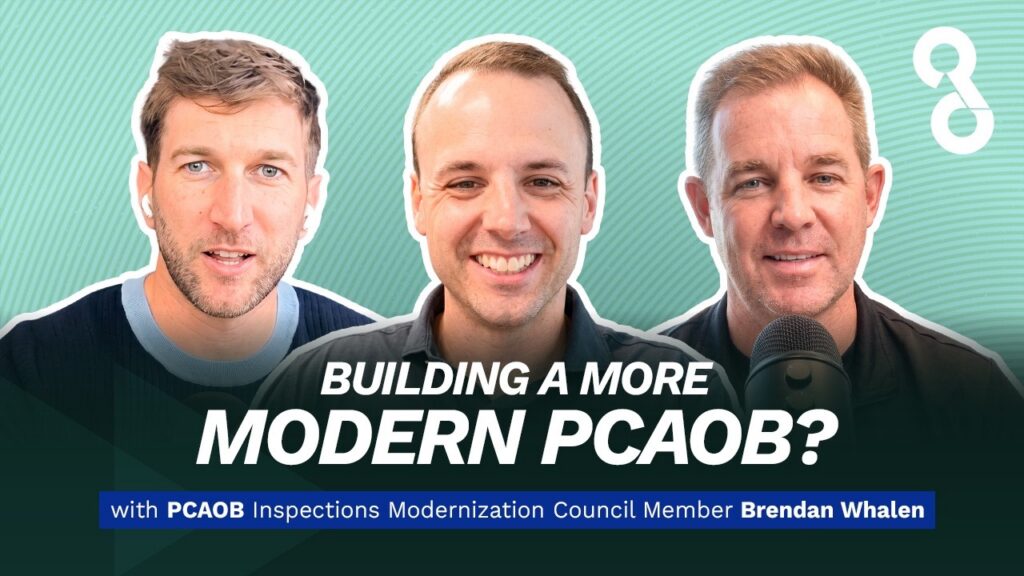
Most regulatory bodies wait until they have no other choice before asking for help. The PCAOB is doing something different. On May 28, 2026, the Board announced the formation of the Inspections Modernization Council, a new advisory body designed to bring outside expertise into the work of reshaping how PCAOB inspections operate. For audit firm leaders who have watched the inspection program churn largely unchanged for two decades, this is worth paying close attention to.
The move signals something bigger than a procedural update. It reflects a willingness at the leadership level to acknowledge that the best answers are not always found inside the building — and that getting modernization right matters more than getting credit for figuring it out alone. Here are five things audit firm leaders need to understand about what the PCAOB just announced and what it means for your practice.
1. The PCAOB Is Acknowledging That the Inspection Program Needs to Evolve
The announcement is direct about something the profession has observed for years: the PCAOB’s inspection program, while valuable, was built for a different era. More than 20 years have passed since its creation, and the audit environment has changed significantly. Firms are managing complex technology ecosystems, operating under new quality management standards, and navigating a regulatory landscape that looks nothing like 2003.
The Board’s acknowledgment that “opportunities exist to modernize PCAOB inspections so they remain relevant and resilient” is notable precisely because it is candid. It does not pretend the current model is sufficient. For firm leaders who have quietly felt that inspection activity was not always calibrated to where audit risk actually lives, this is an important signal that the conversation is now open.
2. Seeking Outside Expertise Is a Leadership Strength
There is a particular kind of organizational confidence required to look outward for answers rather than insisting your internal perspective is sufficient. The PCAOB’s decision to form an external advisory council reflects exactly that confidence, and it deserves credit.
Chairman Demetrios (Jim) Logothetis has moved quickly to frame modernization as a collaborative effort rather than a unilateral one. That posture — inviting investors, audit committee members, financial executives, academics, technologists, other regulators, and practitioners of all firm sizes to weigh in — is not what passive leadership looks like. It is an active choice to prioritize the outcome over institutional ego.
For audit firm leaders, this matters. Organizations that are willing to stress-test their assumptions with outside perspectives tend to build more durable systems than those that do not. The PCAOB is modeling something worth taking note of, regardless of where you sit.
3. The Breadth of the Council Signals Genuine Openness
The list of participants the PCAOB is seeking is deliberately wide. Investors. Audit committee members. Public company financial executives. Academics. Technologists. Other regulators. Practitioners from firms of varying sizes.
That breadth is not accidental. It reflects an understanding that inspection modernization is not a problem with a single stakeholder perspective. A smaller firm navigating PCAOB inspections with a lean team experiences the process very differently than a large national firm with a dedicated inspection readiness function. Including both ends of that spectrum — and everyone in between — increases the likelihood that what comes out of this council actually works in practice, not just in theory.
The explicit commitment to applicants who have “a demonstrated commitment to the interests of investors and the public” also keeps the council anchored to its fundamental purpose rather than letting it drift into a vehicle for narrow interests.
4. The Application Window Is Short
The deadline for applications to participate in the Inspections Modernization Council is June 15, 2026 — less than three weeks away. For firm leaders who have opinions about how the inspection process could be improved, or who want their firm’s perspective represented in the modernization conversation, the window to act is now.
This is not a passive opportunity. The firms and individuals who engage with the process early will have a hand in shaping what comes next. Those who wait for the results to be published will inherit whatever direction the council sets without having contributed to it. If your firm has built genuine expertise in inspection readiness, quality management systems, or audit technology, this is a moment to put it to use.
5. Modernized Inspections Will Raise the Bar for Everyone
The end goal here matters. Better-calibrated PCAOB inspections — ones that reflect how audit work is actually performed today, that account for technology and quality management systems, and that are built with input from across the capital markets ecosystem — will ultimately raise expectations for all registered firms.
That is not a warning. It is an opportunity. Firms that have invested in building functioning quality management systems, trained their people, and put real infrastructure behind their inspection readiness will be well positioned when the inspection program catches up to where the profession already is. Those that have not will find the gap harder to close once the new standards are set.
The PCAOB is doing the right thing by asking for help before announcing the answer. Audit firms should take the same approach — building the systems, expertise, and outside perspective needed to stay ahead of what is coming rather than reacting after the fact.
CPAClub works with audit firms of all sizes on quality management systems, QC 1000 implementation, and inspection readiness. If your firm is working through what modernized PCAOB oversight means for your practice, we can help.